Removing the automatic condition from your licence
There is one route, and it is a driving test. Here is what that test adds on top of what you can already do.

If you passed your practical test in an automatic, your NSW licence carries a condition restricting you to automatic vehicles. It does not lapse, and no amount of driving experience clears it. The one mechanism that removes it is a practical driving test taken in a manual vehicle.
That is a smaller job than it sounds.
What carries over
Most of what an assessor watches has nothing to do with the gearbox. Observation at intersections, head checks before every move, gap selection, speed for the conditions, road position, signalling and hazard response are the same skills you were assessed on the first time — and you have been using them unsupervised ever since. You are not starting again; you are adding one layer to something you already do.
What the manual test adds
- Clutch control. Moving off smoothly, creeping in a queue, and coming to a stop without stalling.
- Gear selection. The right gear for the speed and the load, chosen early enough that it never competes with your observation.
- Hill starts. Holding the car, finding the bite point, and pulling away without rolling back towards the vehicle behind.
- Recovering from a stall. Handbrake on, neutral, restart, and back into the flow without panic.
The failure that actually costs people the test is rarely the clutch itself. It is that the clutch borrows attention, and the observation quietly slips while the gear changes happen. That is why practice matters more than tuition at this stage: the gear work has to become unconscious before test day, so the attention can go back where it belongs.
What you need in place
- a registered, roadworthy manual vehicle you can present on the day — it does not have to be yours
- enough supervised practice in that vehicle, not just in any manual, because bite points differ
- a booking made through the official channel
Check the current requirements before you book. Eligibility, fees and what you must bring are set by Transport for NSW and change from time to time. The NSW driver licence tests page is the authority on today's version; this page only explains how the condition works.
Is it worth doing?
For a great many drivers, no. Automatics dominate new car sales here, and plenty of licence holders never sit in a manual again.
It earns its place if you expect to drive a work vehicle in trades, agriculture or plant operation; to hire cars overseas, where manual is still often the default and the cheaper booking; to move up to a heavy vehicle class later; or simply to stop the question coming up at all. If none of that is on the horizon, the condition costs you nothing in ordinary driving.
Questions drivers ask
How do I remove the automatic condition from my NSW licence?
By passing a practical driving test in a manual vehicle. There is no waiting period and no paperwork-only route, and driving experience on its own does not clear it.
Does stalling during the test mean an automatic fail?
Treat this as instructor interpretation rather than a published rule: what matters is the safety consequence of where you stall. A stall at the kerb is a different event from a stall part-way through an intersection, because the second one leaves you in conflict with other traffic. The official marking criteria are published by Transport for NSW.
Do I need my own manual car for the test?
You need a registered, roadworthy manual vehicle to present on the day, but it does not have to be yours. A driving school car or a family car both work. Practise in the car you will actually present, because bite points differ between vehicles.
Does removing the condition reset my licence stage?
No. The condition sits on the licence you already hold. Removing it does not change your licence class and does not restart your time in the graduated licensing stages.
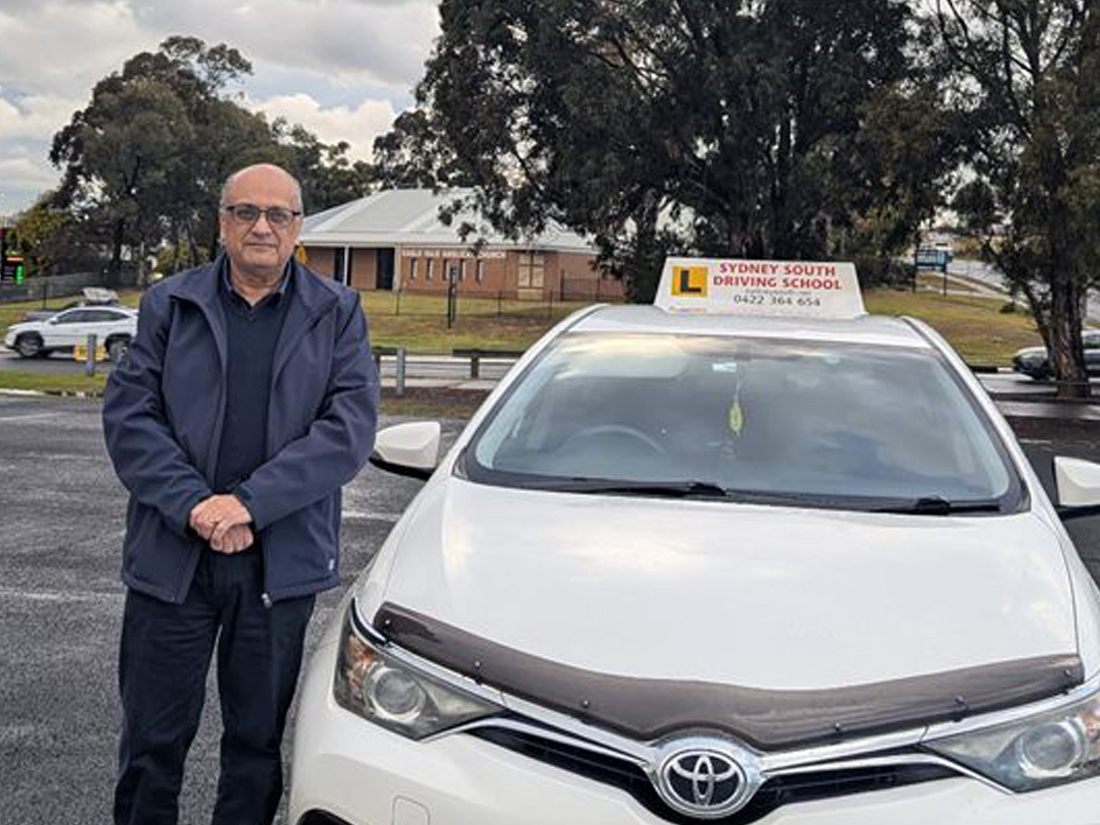
Senior driving instructor at Sydney South Driving School since 2013, with a Bachelor of Commerce and a professional background in accounting and five-star hospitality. More about Ashraf